recent posts

Showing posts with label George Douglas Anderson. Show all posts

Thursday, February 1, 2024

New chapbook: George Douglas Anderson JUMP OUT ANY WINDOW (Backroom Poetry, UK, 2024) 32 pages


Jump Out Any Window is my latest chapbook and consists of 20 recent poems. Most have not been previously published. A big thank you to the editors of Bad Acid Laboratory, The Scum Gentry, Seppuku (issue 5) and The Asylum Floor who have previously published some of my work which appear in the chapbook.

Check out the backroom website for more information about their list of poets, bios and sample poems. 

Purchase the book here: https://backroompoetry.sumupstore.com/product/jump-out-any-window-george-douglas-anderson


The backroom poetry site in its poets section features my poem 'The Mayor of Little Gary Beach'. 
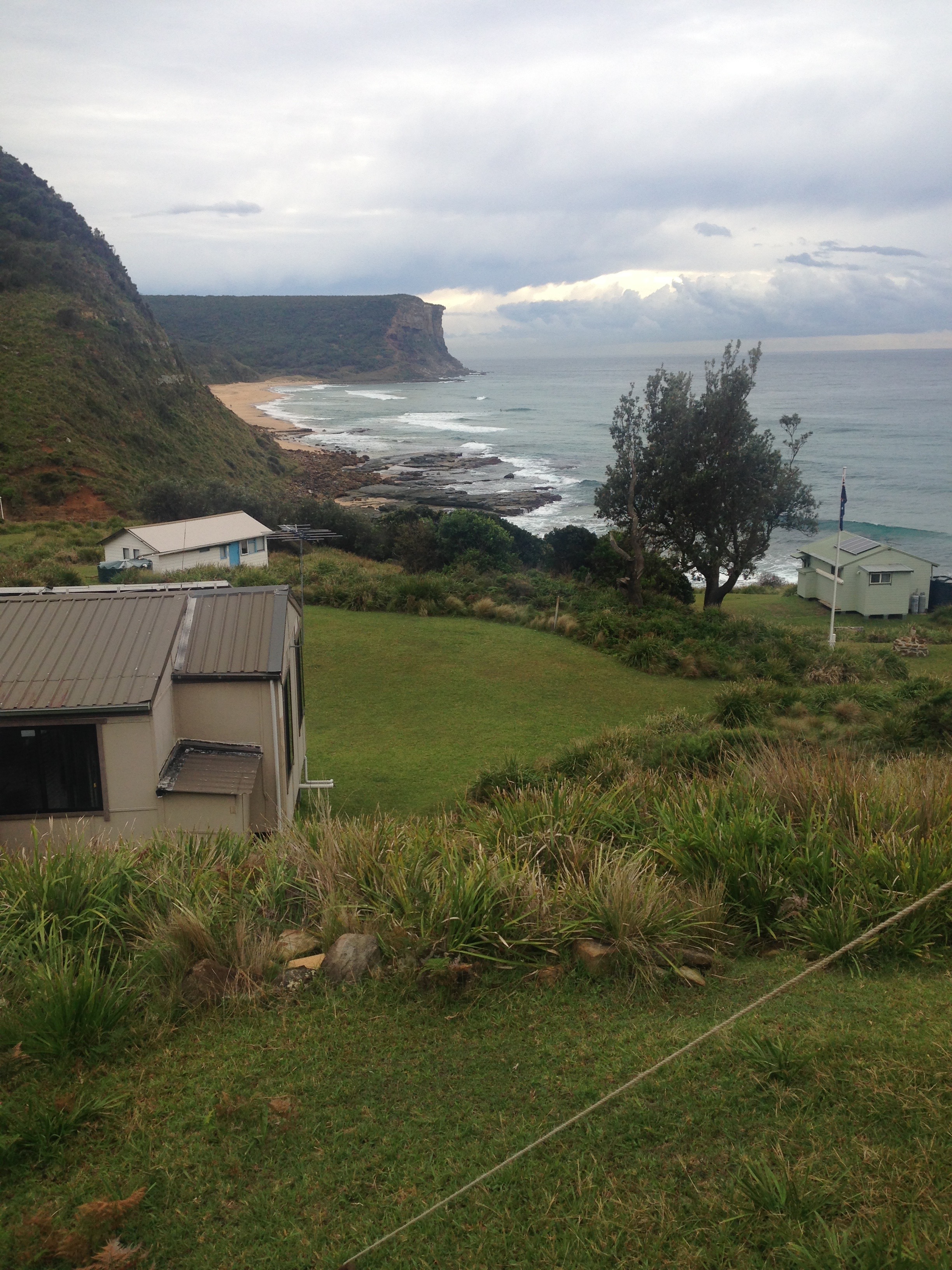


The Mayor Of Little Gary Beach


He waves to me from his bed 

in the decrepit Depression era shack

and like a true gentleman


offers me a beer, his only condition

that I take all my empties (& his)

with me upon my return journey 


along the flimsy beach path

to the surf lifesavers’ car park.


He is laid up with a knee tendon

injury & points to the fridge.


I open a VB can and he quips,

‘There’s heaps more where


that came from’ & shakes my

hand vigorously. I explain to


him that I’m down for the week

and staying in Mark’s shack.


It rains for most of my stay.

I befriend a bush rat which


usually makes its appearance

scurrying along the small kitchen


bench nearing dusk. There is 

running water but no power


so I try to get the words down

in the arvo before dark &


later listen to a micro radio 

which plays 60s jazz. On my


last morning at Little Gary,

before leaving, I knock


on the Mayor’s door

& he points to the fridge.


I give him a solid handshake,

down a quick VB & grab


a big black plastic bag

chock-full of empty beer cans


and make my way back to

the car park to catch a lift

back to the busy city.  


Little Gary Beach is a small coastal village about 30 kilometres south of Sydney, New South Wales and is only accessed by foot through a narrow beach trail above the tide line. 


Most of the dozen or so shacks at Little Gary Beach were built in the 1920s and 1930s with the approval of the local farm owner.  The area was formally added to the surrounding Royal National Park in 1954 and the NSW Government has for decades attempted to demolish the shacks for environmental concerns. The ongoing legal battles are complicated and many shacks have survived this day.


In David Hill's  Foreward to Ingeborg Van Teeseling’s excellent book SHACK LIFE: The Survival Story of Three Royal National Park Communities, reveals about Little Gary, “It is part of the unwritten rules of the place that whenever you go there, even as a guest, you carry in with you as much as you reasonably can. In addition to lugging food and drink (Era has a strong tradition of enjoying a drink!) there is a need to carry in kerosene for the lamps and the refrigerators and gas tanks for the cooking stoves, although many shacks now increasingly have solar power panels."


What Hill doesn't mention is that what you bring into Little Gary Beach you must return back to the city. I suppose this simple virtue is the essence behind the poem 'Little Gary Beach'.


You can purchase SHACK LIFE here: https://www.amazon.com.au/Shack-Life-survival-national-communities/dp/1742235484


Another poem, in prose form, perhaps worthy of further explanation is 'Alf's Lost Paradise' a last minute inclusion into the chap. What I wanted to do in the poem was to tell a simple story of visiting a friend’s  collapsed hippie commune with the purpose of possibly getting his hard earned back. 


‘Alf’ had poured a heap of his cash into a section of land into a property in the Kangaroo Valley in the mid 1970s. The deal was dodgy like many at the time. It didn’t secure him any property rights apart from access to a small portion of it. His section, like others on the property, looked amazing, particularly to city dwellers, but it had no connection to electricity, gas or sewerage. Hippies came and went to the Valley until about ten years later they had completely disappeared.


We drove down with Alf in the 1980s to see if we could get his brass back. At the time, I drove a Datsun 1000, a shit of a car, but reliable. We parked the vehicle near the ‘commune’ and dislodged a large rock to place behind the front wheel to prevent it from rolling down the hill. To our surprise there was a red belly black snake coiled there ready to strike. 


 Alf’s Lost Paradise 


I drive the old Holden Ute to visit Alf’s commune, his ‘little piece of paradise’ in a cleared wood 
in Kangaroo Valley down the South Coast. 

The original hippies are long gone.
 Several white ant gorged shells of the once hopeful tenements & rotting caravans now leak
 like metallic bile into the local creeks. 

Alf points to a mini geo-dome in the next paddock 
steeped in thick native Silvergrass. His abode & our lodgings for the long weekend. Eight by eight feet in circumference. 

Nearing sunset, we clear out several feral bottle bongs from previous anonymous squatters & roll out
 our sleeping bags in the cramped, tepid quarters. 

The owner of the property, Boyd, an aspiring surreal artist 
lives in the last habitable frame, a tall giraffe of a humpy reached only by a 25 foot ladder with thin dodgy wooden rungs. 

From his pad you have a spectacular view of the Valley: 
old growth forest of Scribbly Gum, Red Bloodwood & Turpentine, set above a luscious understory of thick sclerophyllous heathland. 

We call on Boyd in the early morning & make the steep, precarious climb to his loft. He hands Alf a large glowing spliff. 

‘I don’t smoke that shit, no more. Really Boyd, you know why I’m here. Any chance you can refund me my bread, man? Any of the 18 Grand
 I contributed to the commune would be greatly appreciated! I only pass through these woods on rare occasions now. I’m dead fucking broke, mate!’ 

Boyd is calm, reassuring and gently embraces Alf like a son. 

‘You know I can’t do that Alf. We made a gentlemen’s 
agreement many moons ago. As you know, your money has long
 been spent on improvements to the property, not just enhancing my wealth.’ 

Disappointed, we head back to the geo-dome for the night.
We make a small camp & as we chew on some home-baked gummies, Alf enthusiastically thrums on his bongo some of his groovy
 Habanera beat patterns. 

Later, we gaze into the sky.
 The universe melting. Stars like candles. 

Sometime during the night we crash into the dome,
 the door ajar and we are exposed to a throng of mosquitos. 

Later in the dark, I awake with rats sniffing & gently clawing at my head. I keep the torch on low but gradually the beam fades. 


Another poem that I would briefly like to discuss here is ‘Mushroom Carpentry’.  The poem stemmed from an anecdote told to me years ago by a friend who was an apprentice carpenter at the time. He once downed some acid during a job and somehow managed to affix two knobs to a door where one should actually exist. The bloke survived ok and is now a very comfortable millionaire many times over. I like the crazy humour and absurdity of the piece.


Mushroom Carpentry


The boss’s instructions to the young 

blonde apprentice are straightforward:


‘Install ten sets of standard door knobs

where indicated & if you complete the job by 2

you can fuck off early.’


The tab of acid the rookie drops

after lunchtime seems to come on

much earlier than he had anticipated.


When he closes his eyes-

the world churns in collapsing 

walls of logic & colour- 

multiple flower heads explode 

& then dissolve- in a chaotic, 

kaleidoscopic vision. 


When the boss returns to the work site

around 2, he is totally pissed off to see 

two doorknobs, weirdly attached 

to the centre of the orange front door,

where one should functionally exist. 


He angrily confronts the bemused apprentice,

‘Mate, you on the fucking magic mushies again?’


Saturday, April 2, 2022

A Conversation With Danny D. Ford


When did you first develop a serious interest in art?

It’s hard to pinpoint exactly, as an interest in art wasn’t something to shout about where I grew up. I think I probably internalized my artistic interests a lot of the time, for fear of being judged, or simply because it held little social value at home or at school. I suppose my first artistic interest was film. Having older brothers offered many opportunities, and the amount of good VHS cassettes lying around the house was a real blessing. Later on film crit and photography were two subjects I studied from the age of sixteen. Poetry came out of keeping a diary when backpacking, and it’s been a daily habit ever since. 

Apart from Raymond Pettibon, who do you really dig and who have others  influenced your work? 

‘The Ren & Stimpy Show’ and Garbage Pail Kids both made a big impression on me as a child.  As did Quentin Blake’s illustrations. The extreme close ups in Ren & Stimpy and the fear I felt looking at the Pail Kids, all covered in spiders & gunk, gave me a nice sort of jump. It intrigued me. Blake was different, thinking about it, his drawings are probably part of why I have been drawn to watercolours. Ralph Steadman was probably the first artist whose name I could remember. I adore ‘The Curse of Lono’ and always go back to it. The way he portrays power and movement is truly amazing. I admire Aubrey Beardsley’s work, the way he uses patterns and block black is something to behold. Robert Crumb’s artwork blows my mind and I particularly like the way he draws clothing. James Ensor is another I really like, especially the faces and Otto Dix too, in particular ‘The War’ drawings. And Goya’s ‘Black Paintings’ have stayed with me since seeing them a few years ago. I saw Ruben’s ‘Saturn’ the same day and it’s possibly my all-time favourite painting. 

How did you go about developing your illustration for George Anderson's chapbook 'The Beast With Three Legs'? 

When I read something I know I am going to illustrate, I make short-hand notes; a mixture of physical details, inanimate objects, screenplay-type descriptions. It’s important to me that I am able to verbalize my immediate feelings about the manuscript. There is always a key element that will dominate my thoughts and that thing is my starting point - for The Beast with Three Legs, it was a tomato. 

It’s really about how that starting point interacts with ideas that come up during further readings - and of course how that all fits with the author’s opinion. I sketch out a rough draft, often adding cut outs from print media. I then scan the sketch and work on it digitally, sometimes adding photographic details or messing with the balances etc. 

For ‘Tomato Head’ I knew early on I wanted to use a dotwork effect. I feel that black marker pen has a combativeness to it. I am a big admirer of Raymond Pettibon’s artwork, and I think most people would agree, fat markers are just nice to write with. I use two different sizes and I begin with the smaller of the two. Once I have the outline and the main areas marked out, I use the larger nib to add heavier shading. I first began experimenting with this style while producing screen print designs, and then later adding them to acrylic backgrounds. 

Are you largely self taught or have you studied elsewhere?

Yes, I am an autodidact. I have no formal training in drawing or painting. I am a magpie, I spend many hours studying the things I like and I really try to understand, dig into the why & how of it. My wife & friends tell me I am a weirdo. Fair enough. Ten years ago I was doodling on post-it notes, passing empty hours as a temp in a government transport department. Those sketches were shit, but some of them would make my colleagues die laughing, which naturally encouraged me. I think I’m mostly interested in comedy deep down. 

Can you show us further examples of your work? 

https://www.theunfoldinghead.com/

https://www.theunfoldinghead.com/neverkillarainbow - screen print designs

attached images ‘Raspberry Rabbit’ & ‘Coronation’  first published in Obscure Quarterly II (Dec ’21) https://clairobscurzine.bigcartel.com/product/obscure-quarterly-issue-2:


‘Sunshine Junkie’ cover artwork, first published by Between Shadows Press (Oct ’21):

https://betweenshadowspress.bigcartel.com/product/sunshine-junkie-by-danny-d-ford 

You have been living in Italy for about a decade. What do you like most about the culture?

I like the way people just say it. They tell you straight up. There’s little sense of shame or embarrassment when disagreeing or discussing difficult subjects. Italy has taught me how to speak up and be honest about how I feel. It’s not about waving your hands and shouting (it totally is) it’s about saying ‘hey, I’m here and I have an independent voice’. People make time to listen to one another, and as you would imagine, take time to eat well and eat in company. When you walk into a bar here, you get involved in the conversations around you, every time. It would feel more awkward not to.  

 What's next in the pipeline?

More poems and more drawings. I want to keep mucking around with different materials.  Hopefully work on more collaborations, cover designs and put more poems out. I have an illustrated poetry chapbook ('Seven Letter Cities') coming out with Between Shadows Press in April, and one with River Dog Press in August, with a further collaboration with Analog Submission Press currently under construction. I want to continue making absurd & abstract short films, in particular I want to make more episodes of Walrus Lady, and of course I want to continue screen printing with Never Kill a Rainbow. I am also working on the feature length Gavin Fennelgrip comic. He’s a cartoon character I’ve been getting to know. He’s a proper cunt, but very loveable.   

Thursday, March 24, 2022

New Post: George Douglas Anderson FANTAIL (Ariel Chart International)

Fantail

Posted: 15 Mar 2022 03:00 AM PDT


Fantail


The fantail perches

     on the thin 

wire

          of the      fence

chirping

         angling

                north

north-east

his long brown & white tail

spinning

                 twitching

like a baton. And then-

       he lifts off

flitting in the cold morning

air   looping

           & hovering

   & chasing

             & briefly

touching a mate

                in mid-air

                     within my arm’s

length. 


Skitting off-

he returns

           instantly    to sit

                    on the cow

 paddock wire

                     before me-

only

 to fling himself      outwards

        in a wild loop

skimming the

                     ground.


And as I watch the fantail

I think about how free he is 

& how detached

                   I have become.


George Anderson


George Anderson has taught in New South Wales, Australia for over 30 years and is editor of Bold Monkey Review, a blog devoted to promoting the work of alternative small press writers. He occasionally adds to the pile- his latest chapbooks include, The Factory of Eccentric Poetics (Holy & Intoxicated Publications, 2021) and The Beast With Three Legs (Between Shadows Press, 2022).

Tuesday, February 22, 2022

New Release: George Douglas Anderson THE FACTORY OF ECCENTRIC POETICS (Holy & Intoxicated Publications, 2021) 20 pages


In this new chapbook, Anderson veers away from his usual narratives & portraits. The poetry here is more abstract. It includes many found and cut & paste poems, sometimes influenced by his students. The front cover is beautifully illustrated by the Swedish writer and artist Henry Denander. 


Find Jason Gerrish’s recent interview about the chap here: 


https://georgedanderson.blogspot.com/2022/01/jason-garish-interviews-george-douglas.html


A couple of blurbs about the chapbook:


 The Factory of Eccentric Poetics

George Douglas Anderson


Poets, are mostly cowardly, that is, once a poet hits on a form/style to comfortably put their words across, they dig a hole and jump into it: (myself included) it feels safe and secure.


George Douglas Anderson digs tunnels and you never know where the tunnels will be taking you, until you are there: as a Small Press Publisher, when I request and receive a manuscript from George, I know one thing for certain, it will be quality: ‘The Factory of Eccentric Poetics’ is exactly that: from the hazy, ghostly cover art work from the ever brilliant Henry Denander, depicting a trumpet playing jazz musician, drowning in a flush and array of uplifting colours, to the final poem, ‘The Thing Itself’, the reader is easily, smoothly locked into the rhythm of the book, as the poems lunge and plunge like the soulful breath of Chet Baker or glide silk-like, like a haunting Miles Davis solo: the time signatures roam freely, without hesitation: passion and compassion drives this book: ‘The Parched Grass’ ‘Danger Falling Man’ ‘His Brain is a Fish’ ‘The Cult of the Amateur’ ‘Skinned’ to name a few, are simply, strangely enchanting and captivating.


Dig ‘The Factory of Eccentric Poetics’: dig the works of George Douglas Anderson:


John D Robinson

Poet and Publisher.


The Factory Of Eccentric Poeticsis the latest chapbook by author George Douglas Anderson. In this collection of eighteen new and abstract poems, Anderson explores a new poetic voice, veering from the authorial and objective narrative style he established in earlier chaps and in his full-length book of poems: The Rough End Of The Pineapple.In his own words, Anderson says,“The chapbook is an attempt to affirm but also to subvert post-modern ways of thinking…”.


The poem A Bee Collecting Honey is a sequence of engaging images, which defy a linear interpretation. It is the first poem in the collection that had me consider: Can a poem be a collage? 


Anderson says, of A Bee Collecting Honey,“The chronology of the poem’s narrative is deliberately thrown into disarray and instead is revealed in fragments. It uses compressed images and associations to reveal a woman’s tormented life which has been tragically cut short.”


Several poems in this collection read like a collage; and if a poem can be described as a crazy quilt, it is Anderson’s poem Skinned, which he says of the title, “…refers to a recent trend to cut out the full back tattoo panels of heavily tattooed corpses and to preserve them as Art.”


The images in this piece engage me so successfully, I become hell bent on interpreting them collectively, but Skinned defies a linear interpretation. I feel the poem calls for an escape from the material world, for a spiritual release. Anderson says of the poem“…I perhaps imagined the words, like the deceased’s tattooed skin expressing a montage of feelings and experiences.”


The risks Anderson takes cutting from usual narrative style, make The Factory Of Eccentric Poetics a rewarding read. They are a postmodern patchwork that reveal a diversity of spirit and a troubled world of tortured souls.


Jason Garish


Limited edition: 25 signed and numbered. Only 5 left to dispatch.


 Buy the book here direct through PayPal: georgedanderson8@gmail.com for $5 AUD  plus postage.


Postage: Australia wide: $2.20

                USA / Europe: $14.60 (I'll throw in another chap)

Monday, October 5, 2020

WAYNE F. BURKE INTERVIEWS GEORGE ANDERSON 25 SEPTEMBER 2020


Wayne F. Burke: Your poetry brings to my mind the work of ubermench Charles Bukowski. Not so much in form, though similarities exist, but in subject matter, meaning the grittiness of the life pictured, the occasional outbreak of mayhem, and oftentimes indiscriminate violence. My question is not has Bukowski's work influenced your writing, but how big an influence has his writing been to your work?

Anderson: Charles who? Haha...yes, I've read most of Buk's stuff, but mostly in the last ten years to contribute to a few critical reviews of his work on my blog Bold Monkey. Bukowski’s Best Poetry Books is a useful example: https://georgedanderson.blogspot.com/2018/11/a-readers-appraisal-after-25-years-best.html


I first read Bukowski in New Zealand where I lived for six months before I migrated to Australia from Canada at aged 23. I read his short story collection 
Erections, Ejaculations, Exhibitions and General Tales of Ordinary Madness (City Lights Books, 1972) and a few years later his novel Women (Wild & Woolley, Sydney, 1979). The first book of poetry I read of his was BURNING IN WATER DROWNING IN FLAME (Black Sparrow Press, 1978) which is a significant volume of his new & selected poems published between 1955-1973. 

I was highly impressed by the collection but at the time I was writing fiction, including two unpublishable novels The Dispute: A Preposterous Story and Inside the Typewriter Man. As a young teacher in Western Sydney, I recall returning to Buk's poetry and incorporating 'k.o.' and 'machinegun towers & timeclocks' (from At Terror Street and Agony Way) into my Year 9 English curriculum. Years later, as a Year 11 teacher at another school, I devised a Preliminary HSC course on Bukowski's poetry, initially focussed on the theme of 'The Outsider.'


I'm probably the only high school teacher in Australia who has taught Buk in any detail. The poems we studied  over a ten year period usually included 'the tragedy of the leaves', 'spark', 'Young in New Orleans', 'Bluebird' and my personal favourites, 'Dinosauria, we' and 'The Genius of the Crowd'. I loved the subversive nature of Bukowski's writing- how he barred his ass to the establishment- both in form and subject matter. In creating the course, I was trying to expose my largely privileged students to alternative ways of thinking, of momentarily getting them to step into the shoes of a struggling artist who was far less fortunate than themselves. 

It wasn't until the shocking death of my mate Roger in 2000 from throat cancer that I decided to write down some of my ideas. As his coffin was being swallowed behind the curtain towards his cremation- I told myself that I better get some of my stuff down before I too cacked it. 

A couple of days later, I was at school supervising an exam when a poem flew out of me- raw and direct. The poem 'A View of a Friend' which appears in the collection The Rough End of the Pineapple is the first poem that I wrote:


Arriving at your viewing

at Palm Grove Memorial Cemetery that late June morning

you joking, only days before,

how you’d avoid the GST

if you cacked it before the 1st of July.


The blank, tattooed receptionist

glides us to an impressive   

gold-coloured plaque on a door which reads:

DAVID ROGER JOHNSON.


Roger, I didn’t know 

your first name was actually David!


Pushing the door open-

bewildered

stumbling before you

amazed


& with each step

aghast

      seeing your corpse for the first time

through the bright

but soulless room

from

      changing perspectives

of alternating light

& meaning:


the manufactured scent

the opulent coffin


you seemingly sinking 

small and insignificant within it-


the former hulking beast of your huge frame

a sham-

a remnant of your former boisterous Rogerness.


The boys reckoned you looked like a vampire 

in that silent black box-

those bucked incisors they could never fix

your dark black hair smoothly caressed

in your preferred mid 70s Elvis appropriation.


I couldn’t help thinking

I could poke 

my fingers

without too much effort

through your rice paper cheeks.


As I grieved beside you 

I tried vainly to fathom the significance 

of your death at age 48


working it all out-

the tragic  

stupid inevitability of it all-


even picturing 

the view of the room


the afternoon light

dancing on the western walls

& on the plastic vases of flowers


from the perspective 

of your depleted


cancerous frame.


In retrospect, the poem adopts elements that Buk may have used- free verse, lower case, experiments in enjambment- but to me it was a one off- a creative exercise in attempting to capture a key moment in my life- using what limited language skills I possessed.  


After writing about my friend Roger, I was on a roll for a couple of years and wrote about everything and used a variety of styles and forms. I wrote about my past in Canada & about the friends I grew up with and about my old man. I mostly wrote narrative poems in free verse using simple, unembellished language. 


There are about 25 poems in the collection set in Montreal, below the tracks in NDG, which recall some of my juvenile exploits in poetic form, including, ‘At the Sanair Super Speedway’, ‘The Dope Plant’, ‘First Fist Fight’, ‘Chopper’, ‘Tabarnac!’, ‘Ten O’Clock’ & others.


Looking back, my old man was a kind of Chinaski figure- a drunken bum but without the insane creativity. Similar to Buk, he grew up in a time of depression and world war. He was a disgraceful role model & he features in several of my poems and stories, including 'Cold Turkey', 'Frankie', 'The Police Interview' and 'Switching Off the Lights' in the collection. 


In 'Cold Turkey', a cringe-worthy but biographically accurate poem, I explore the dark depths the old man sank, following the death of his wife, my mother, aged 47:


Cold Turkey


One winter evening

after my mother died 

of a massive heart attack

the old man pounds

on my bedroom door

& drunkenly asks, ‘You hungry?’


In the kitchen

he takes a large turkey

directly from the freezer

& whacks it into the oven- 

and turns the temperature up to 450F


He has been drinking for two or three days.


As we wait for the turkey to cook 

the conversation is circular


every 20 minutes or so

he glances up at me and slurs-


‘You think you’re smart?

You don’t know fuck all!’


The old man sits there in his white singlet

his eyes dissolving slowly into his head


& later like clockwork he asks

flexing his right bicep

steeled by years of foundry work:


‘You think you’re tough, don’t you? Feel this!’


It is rock hard-

I try to crush the muscle with my soft teenage hands

I can only get them half way around.


He takes another drag from his Players Export cigarettes

downs another Molson

& in mid sentence nods off.


*


I set the alarm

& wake at  4 AM. 


As expected, the old man is crashed out-

under the kitchen table in pissed pants

snoring in a rhythmic but shaky rattle

his left arm his pillow.


*


Our huge mongrel cat 

Thomas Reef Redback

is most content for nearly a week-


the old man in the early mornings

flinging him

half-raw portions

from the big bird’s inner core.


I've always been attracted to writers who realistically focus on characters who live on the margins of society- Orwell, London, Steinbeck, Dostoyevsky, Kerouac. Even as a young child I loved reading the tales and adventures of the courier de bois in Canada. 


In my writing I often like to explore the thin edge between order and mayhem, when ordinarily good people drop any pretence at civility and plunge into shameful, atavistic behaviour. I first developed an interest in this concept years ago when I closely studied novels, such as HG Wells's The Island of Dr. Moreau and The First Man on the Moon, Shelley's Frankenstein and Conrad's Heart of Darkness. The poems 'Wright', 'Mad Kiwi', 'Surrey Hills on a Saturday Night', 'K.O.'  and 'My First Fist Fight' are some examples from the collection which attempt to show this arbitrary descent into chaos. 


In a belated answer to your question, who came first Bukowski or the egg? It's impossible to apportion the percentage of his influence. Being familiar with his writing certainly helped to shape the form and content of my work when I decided to record the stuff. Like any writer, I borrow from here and there and put a specific, individual spin on my ideas.


Q: Following up on my Bukowski question: the first of Sir Charles' I read, like you, was BURNING IN WATER DROWNING IN FLAME. It blew my mind in that it gave me the idea that my life--no matter how boring or dull, or full of shit I thought it--could be used as poetic material. The sense of meaningless I often felt, about myself and life in general could be given meaning through artistic creation. Who I was, what I was, had relevance. Did you feel anything similar after reading Buk? How about some other writer?


Anderson: Yeah, I totally agree. I remember attending a Poet's Union seminar about 20 years ago and all the academics talked about for about 2 hours was the evolving aesthetic concept of the vase in literature over the last 10,000 years or so. Although I still consider John Keats's poem 'Ode On a Grecian Urn' (1819) as one of my favourite poems of all time- I was bored shitless on the day! 


For Bukowski any topic is permissible, however trivial or controversial. I was first attracted to his poetry for his humour, his interesting choice of subject matter, and as I've said, how he put the boots into the establishment. I liked his cynical tone, how he incorporated dialogue into many of his poems, and especially, the improvisational feel of his writing. 


I wrote the poem ‘One Clear Winged Morning’ in tribute to Buk and how  he challenged cultural norms and raised a stiff finger to the elites:


One Clear Winged Morning


For years, I understood poetry

to be the work of flabby grey men


in pompous suits & ties

pouring over obscure lines


in heavily annotated books

mocking each other’s poetics.


But then one clear winged morning 

I discovered that it can be found anywhere: 


in the shell of a burnt out car

in the automated voice of a train guard


on the side of trucks or bathroom doors 

belted out in pubs or on factory floors.


(first published in The Legendary, 2009) 


The poem, was also a direct reference to some of my own material, including to 'burn out'- a 2003 broadside- which was written after a friend's car was brazenly stolen outside my house in Doonside during a party & later set alight in a nearby reserve: 


As you know, there is a downside to Bukowski's writing.Every wanna-be writer (like myself) now thinks they can string a sentence or 2 together and with print-on-demand publishing- they can now cheaply inflict their sexual exploits, depression or alcoholic misdeeds onto the world. 

Bukowski's estate also left him a massive target by allowing so much of his less capable work to be published posthumously through ECCO. He obviously never allowed this material to be published during his lifetime. I gently mock this overkill:  


Horses that Shit in the Woods Eat Sushi at Dawn


the skid row poet

cum multi-millionaire


another used condom of 

his poems recently released


the fourteenth since his death

the proverbial scrapping of the barrel: 


cigar butts, Ludwig, pussy, beer.


(first published in The Legendary, 2010)


Q: I view your work as that of a "descriptive" poet rather than an "introspective" one. (Not to say I find NO introspection in the work.) An "action" poet, if you will; concerned with telling a story, a narrative, rather than, or in addition to, relating feelings involved, of narrator or character/subject of the poem. Would you agree with this assessment?


Sure, I agree! In The Rough End of the Pineapple I deliberately included some of my more accessible portrait poems which use simple language and personal anecdotes to create a visual image in the head of the reader. They usually tell an external story rather than explore the inner eye. 


Over the years, I have experimented in many forms and styles- for the sake of continuity- in this book I have adopted an observational tone and a consistant authorial voice. I tend to view "introspective" poems with suspicion and often find myself gagging on revelatory verse which often provide the reader with a self-absorbed or sentimental illumination.  


Q: Do you feel (ha! I am putting you on the spot), that writing criticism, as in your BOLD MONKEY columns, takes away from your own work or does it feed it? Is your approach to writing criticism like that to a disliked job--something to get through? An irritant maybe? A pain in the you know what? If not, what are your feelings toward writing criticism? What does the act of doing so consist of for you? The results?


I started writing criticism on Bold Monkey in 2007 to help me strengthen my ability to teach my students how to write the stuff. I also used the platform to help support the small alternative press by providing reviews of poetry books which academics usually avoided. 


Early on, I got a lot of positive feedback from Wolfgang Carstens (Epic Rites Press) and RD Armstrong (Lummox Press) and many individual writers. I also tried my hand at reviewing classic texts, such as Salinger’s The Catcher in the Rye, Brautigan’s Watermelon Sugar and Steinbeck’s Travels With Charley. I saw each new book as an intricate puzzle that I had to unravel and had a lot of fun constructing my analysis. 


Later on, John D. Robinson of Holy & Intoxicated Publications (UK) and Hank Stanton of Uncollected Press (USA) were key contributors in getting me to shift my focus from critical to imaginative writing.


In the last couple of years, I am finding it more difficult to find the time to stay on task to complete all reviews. I usually read a book at least 5-6 times, compile notes and interview the writer to gain a greater understanding of what they are trying to achieve. I hate taking shortcuts and as other projects intercede, some reviews have had to be abandoned or have been substantially delayed. 


I never try to kiss the ass of the writers I review. I generally will only review books I can get into, and as you can appreciate, some books are well beyond the scope of Bold Monkey and my comprehension of poetry. Sometimes in my reviews I feel I am writing parody or hyperbole, but at its heart my thoughts are non-bullshit, genuine.


Thanks for taking the time to answer a few questions.


No worries.